Astronomers discovered a giant water reservoir floating in space that is equivalent to 140 trillion times all the water in the world’s oceans. And it’s only 12 billion light-years away!
Neil Armstrong carried a piece of the Wright brothers’ first airplane with him as a memento during his first moonwalk.
On February 6, 1971, Apollo 14 astronaut Alan Shepard became the first man to play golf on the Moon.
Saturn’s rings are much thinner than they appear, with a thickness ranging from roughly 30 to 300 feet (9 to 90 meters).
The world’s first artificial satellite was the Soviet-made Sputnik 1, which completed 1,440 orbits around Earth over three months before burning up in Earth’s atmosphere.
Earth is the only known planet where water naturally exists in all three states: solid, liquid, and gas.
Mercury has no moons because it’s too close to the Sun, which would pull any potential moons away from the tiny planet.
We always see the same side of the Moon because it’s tidally locked to Earth, meaning the time it takes to orbit Earth is the same time it takes to spin on its axis.
There’s a giant 330 million light-year-diameter sphere called the Boötes void that’s almost entirely empty of stars or other matter.
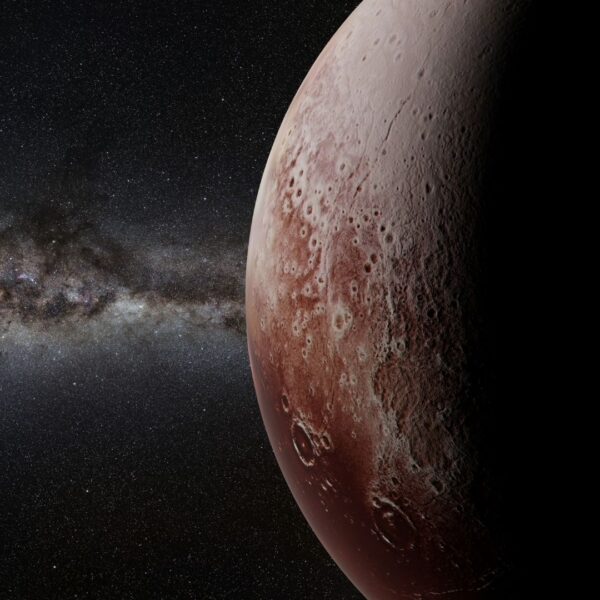
“Zombie stars” are white dwarfs in binary systems that survive a partial supernova explosion, appearing to come back to life.
The smallest star we can see with the naked eye is 61 Cygni, which is about 66% the size of the Sun.
When you look up at the stars, you’re looking back in time. This is because light takes years, decades, centuries, and millennia to travel to your eyes from distant stars.
Supernovas happen when certain stars run out of fuel. When this happens, the star collapses in on itself, creating a shockwave that tears it apart.
Weight changes with gravity. For example, a person who weighs 140 lbs (63.5 kg) on Earth would weigh roughly 3,790 lbs (1,719 kg) on the Sun.
Enceladus, one of Saturn’s moons, has active ice volcanoes that spew ice out into space.
Geomagnetic solar storms can cause widespread blackouts on Earth, with the last significant storm in 1989 causing Quebec’s electrical grid to collapse.
The Earth moves around the Sun at an astonishing speed of about 67,000 mph (110,000 km/h).
NASA scientists reported in 2015 that Mars once held more water than Earth’s Arctic Ocean, forming a vast ocean that covered up to 19% of the planet’s surface.
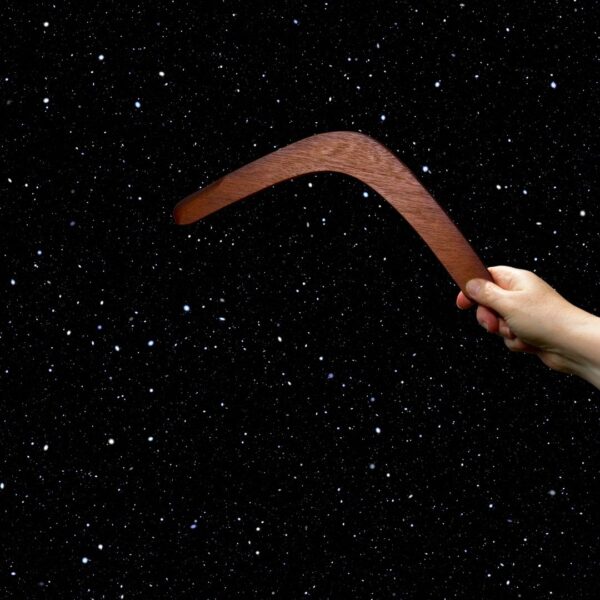
A boomerang thrown in space wouldn’t return to the thrower; instead, it would keep on traveling through the vast cosmos until it hit something.
Astronauts living aboard the International Space Station observe sixteen sunrises and sunsets in a 24-hour period.
Earth’s rotation is slowing down, causing the length of a day to increase by approximately 0.000018 seconds each year.
More than 3,000 years ago, Assyrian astronomers recorded Mercury on the MUL.APIN tablets and called it UDU.IDIM.GU₄.UD, meaning “the jumping planet.”
Contrary to their depiction in movies, asteroids in the asteroid belt are so widely spaced that, standing on one, you likely wouldn’t see another nearby.
Titan, one of Saturn’s moons, has low gravity and a dense atmosphere. If you attached simple wings to your arms there, you could fly just by flapping them!
According to the Russian Public Opinion Research Center, Russia’s oldest polling institution, 49% of Russians believe that the moon landing was a hoax.
Around four billion years ago, Neptune and Uranus gradually changed places as Neptune’s orbit expanded and Uranus moved closer to the Sun.
Mercury’s orbit is the most eccentric of all the planets, following an oval path that makes its distance from the Sun vary during each revolution.
Because the Moon has no atmosphere, the Apollo astronauts’ footprints could last for tens of millions of years before being slowly worn away by micrometeorites.

In the 18th century, French astronomer Charles Messier cataloged 110 of the most fascinating astronomical objects he found while searching the night sky for comets.
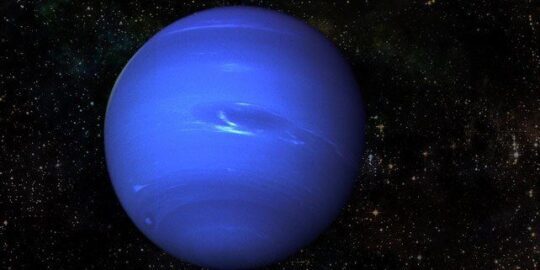
Neptune emits about 2.6 times more energy than it receives from the Sun, and scientists still aren’t sure exactly what’s powering that extra heat.
The Moon’s gravity drives most of Earth’s tides, but the Sun’s gravitational pull also contributes significantly.
Every 26 seconds, Earth gives off a faint seismic pulse, and scientists still aren’t sure what causes it.
As of 2025, astronomers had identified approximately 1.3 million asteroids, and new ones are being discovered at such a fast rate that the total number increases almost daily.
A Messier marathon is an all-night stargazing challenge where people try to spot all 110 celestial objects in the Messier catalog, including galaxies, star clusters, and nebulae.
Every second, about 65 billion solar neutrinos from the Sun’s core pass through each square centimeter of Earth (around 420 billion per square inch) without interacting with anything.
Some stars act like vampires, leeching energy from a nearby star. These so-called “vampire stars” can be found in binary star systems.
Animals weren’t sent to space first just to test whether we would be able to survive the trip; they were also sent to study the effects of high concentrations of solar radiation.
Jupiter completes a full rotation on its axis approximately every 9 hours and 55 minutes, making it the fastest-spinning planet in our Solar System.
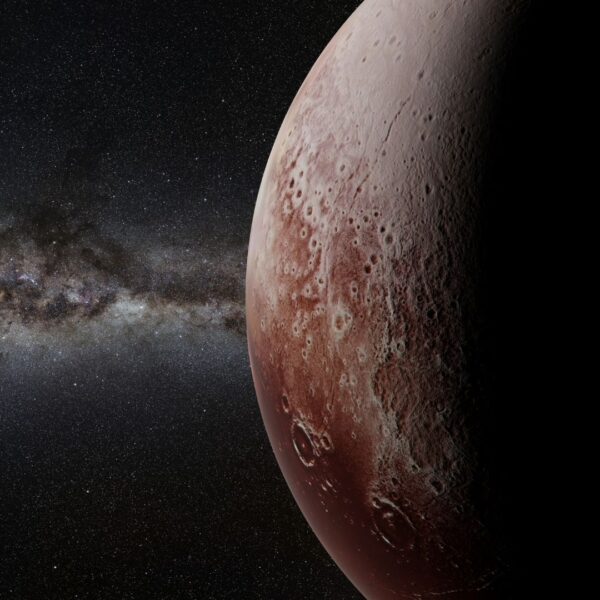
Pan, one of Saturn’s moons, looks remarkably like a walnut. It’s theorized that it gained this shape by absorbing dust and ice from Saturn’s rings.
The Sun formed about 4.6 billion years ago when a giant molecular cloud of hydrogen and helium collapsed.
White holes, as in reverse black holes that push out rather than suck in, are theoretically possible; we just haven’t found one yet.
Each year, the Moon drifts about 1.5 inches, or 3.8 centimeters, away from Earth as tidal forces gradually push it outward.
A year on Mars is equal to 687 Earth days, making it nearly twice as long as a year on Earth.
Earth is the only known place in the universe where fire can burn, since it has the oxygen and pressure needed to sustain flames.
Venus, Saturn, Uranus, and Neptune all have surface gravities surprisingly close to Earth’s, each within about 15% of our planet’s gravity.
The Voyager 1 probe is the farthest man-made object from Earth, currently over 15 billion miles (more than 25 billion kilometers) away.
In 1989, Voyager 2 observed a fast-moving white cloud on Neptune, nicknamed “Scooter,” which circled the planet every 16 hours. By 1994, it had disappeared entirely.
In the mid-1990s, Hubble Deep Field images estimated 200 billion galaxies, but a 2016 study led by Christopher Conselice showed that the number is closer to 2 trillion.
Mars and Earth are like opposites; Mars has red skies during the day and blue skies at sunset.
With over 85,000 known volcanoes, Venus has more volcanoes than any planet in the Solar System.
Some craters near the Moon’s south pole are colder than the surface of Pluto, reaching about −415°F (−248°C) because they never receive sunlight.
At certain times of the year, you can spot Mercury, Venus, Mars, Jupiter, and Saturn with the naked eye on a clear night.
Astronauts on the Apollo 10 mission heard eerie “outer-spacey” music while orbiting the far side of the Moon, which was later traced to radio interference between the spacecraft modules.
One full day on Mars lasts 24 hours, 39 minutes, and 35 seconds.
According to legend, a 16th-century Chinese official named Wan Hu tried to launch himself into space using 50 gunpowder rockets strapped to a chair. He was never seen again.
With an axial tilt of about 25.19 degrees, Mars is the planet whose orientation most closely matches Earth’s 23.44 degrees.
Sunspots are giant magnetic storms on the Sun’s surface. They appear darker than the rest of the Sun because the temperature in these regions is significantly cooler.
It takes about 240 million years for our Solar System to complete just one orbit of the entire Milky Way Galaxy. This is called a galactic year.
In perfect conditions, there are around 5,000 stars visible to the naked eye when you look up at the night sky.
While the names of most constellations are Greek in origin, many stars in the night sky have Arabic names.
Each lunar day lasts about 29.5 Earth days, creating two-week periods of sunlight and darkness at any given spot on the Moon.
Discovered in 2017, ‘Oumuamua was the first confirmed interstellar object ever observed passing through the Solar System.
Total solar eclipses are possible because the Sun is about 400 times larger than the Moon, but also about 400 times farther away, making them appear nearly the same size in the sky.
While most galaxies still form new stars, some have “died,” having long since exhausted the cold hydrogen gas needed for star formation.
On Saturn’s largest moon, Titan, rain falls as liquid methane instead of water, and it’s the only place besides Earth known to have stable liquids on its surface.
Pluto lost its planet status because it shares its orbit with similar-sized objects in the Kuiper Belt, not because of its small size.
The Sun contains an estimated 1.989 × 10²¹ kilograms of gold, slightly more than the total mass of all the water in Earth’s oceans.
Comets follow highly elliptical orbits, spending most of their time in the distant dark reaches of the Solar System before swinging back toward the Sun.
American astronauts who die in space are exempt from their tax requirements, as it counts as dying in the line of duty.
Earth’s Moon is the fifth-largest moon in the Solar System.
Red dwarf stars have much less mass than other stars, allowing them to burn for trillions of years, while our Sun will fade after about ten billion years.
Uranus orbits the Sun at a distance of about 1.7 billion miles (2.8 billion kilometers) and takes 84 years to complete a single orbit.
Yuri Gagarin’s first meal in space consisted of two tubes of pureed meat followed by a tube of chocolate sauce for dessert.
In August 1993, NASA’s Galileo spacecraft discovered that asteroid 243 Ida had a small moon, later named Dactyl, making it the first known asteroid with its own moon.
The Apollo astronauts took geological field trips to Iceland, as NASA believed the terrain there resembled the surface of the Moon.
The largest canyon in the Solar System is Mars’ Valles Marineris, a 4.3-mile (7-kilometer) deep valley almost four times as deep as the Grand Canyon.
In December 1970, the Soviet Venera 7 became the first spacecraft to soft-land on another planet, successfully landing on Venus and transmitting data back to Earth.
On October 4, 1957, the Soviet Union launched Sputnik 1, the first artificial satellite, an event that ignited the Space Race and led to the creation of NASA in 1958.
Uranus has the coldest atmosphere of any planet in the Solar System, reaching temperatures as low as -371°F (-224°C).
Without the Moon, Earth’s rotation would be much faster, and a single day could last only about eight hours, since the Moon’s tidal pull gradually slows the planet over time.
Saturn’s axis is tilted by about 26.7 degrees, giving it seasons similar to Earth’s, but because it takes nearly 30 years to orbit the Sun, each season lasts around seven Earth years.
Neptune takes 165 Earth years to complete one orbit around the Sun, so it has made only one full trip since its discovery in 1846.
The largest constellation in the night sky is Hydra, one of 48 named in the 2nd century by the Greek astronomer Ptolemy.
Earth lies about 26,000 light-years from the center of the Milky Way galaxy.
Pluto has a thin, blue, hazy atmosphere, but its sky would not appear bright blue like Earth’s. Instead, you’d see only a faint haze against the blackness of space.
Astronauts wear special “space diapers” called Maximum Absorbency Garments during takeoff, landing, and spacewalks in case they can’t get to a toilet.
On May 5, 1961, Alan Shepard became the first American in space during a 15-minute suborbital flight aboard the Freedom 7 spacecraft.
In about 5 to 6 billion years, the Sun may emit enough heat for simple forms of life to evolve on Saturn’s largest moon, Titan.
In space, burping usually causes a “wet burp,” because without gravity, gas and liquid in the stomach do not separate.
The leftover heat from the Big Bang still fills the universe. We can’t see it, but we can measure it as cosmic background radiation.
On June 8, 1975, the Soviet Venera 9 space probe became the first spacecraft to photograph Venus’s surface and return images to Earth.
Discovered in 1997, Chariklo is an asteroid in the outer Solar System and the first known asteroid found to have its own rings, which were detected in 2013.
Mars has an atmosphere that is 95% carbon dioxide with only traces of oxygen, and its surface pressure is less than one percent of Earth’s.
Mars contains enormous lava tubes, some stretching more than 59 kilometers (37 miles), formed billions of years ago when flowing lava drained away beneath a hardened crust.
The Apollo 11 astronauts left one of Yuri Gagarin’s medals on the Moon to honor the Soviet cosmonaut who was the first human in space.
In the distant future, every star will burn out, and the universe will enter the black dwarf era, a step toward its eventual heat death, when all light and energy will fade away.