Space is big. Like, unbelievably big. And the deeper you look, the weirder it gets.
Out there, you’ll find planets with sideways spins, stars that pulse like giant heartbeats, and invisible forces that can bend light itself. You will also find distances so huge they make “far away” feel like an understatement.
Scientists are still uncovering new cosmic surprises all the time, which means there is always another fact waiting to blow your mind. Some will make you laugh. Some will make you pause. A few might make you stare at the sky differently tonight.
Ready to explore? Here are 400 space facts to take you beyond Earth.
Space Facts
A bolt of lightning can reach 53,540°F. That’s over five times hotter than the surface of the Sun, which is 10,340°F.
With 3 trillion trees on Earth and up to 400 billion stars in the Milky Way, trees vastly outnumber stars in our galaxy.
The “UFO Abduction Insurance Company,” a leading alien abduction insurance provider based in Florida, has sold over 6,000 policies since 1987.
There is a Scottish tartan designed for Mars exploration. It was officially registered in 2016 to be worn during Mars science, exploration, and outreach activities.
There are roughly 8×10⁶⁷ ways to arrange a standard deck of cards, which is more than the estimated number of stars in the observable universe.
In 1930, an 11-year-old girl proposed the name “Pluto” for the newly discovered planet, inspired by the Roman god of the underworld.
Mike Melvill, the world’s first commercial astronaut, never finished high school and was 63 when he first flew to space.
In the 1990s, Taco Bell made a soft taco tortilla with a 9-month shelf life, which NASA later used for space missions.
Jupiter has at least 95 moons recognized by the International Astronomical Union, with Ganymede being the largest, even surpassing the size of Mercury.
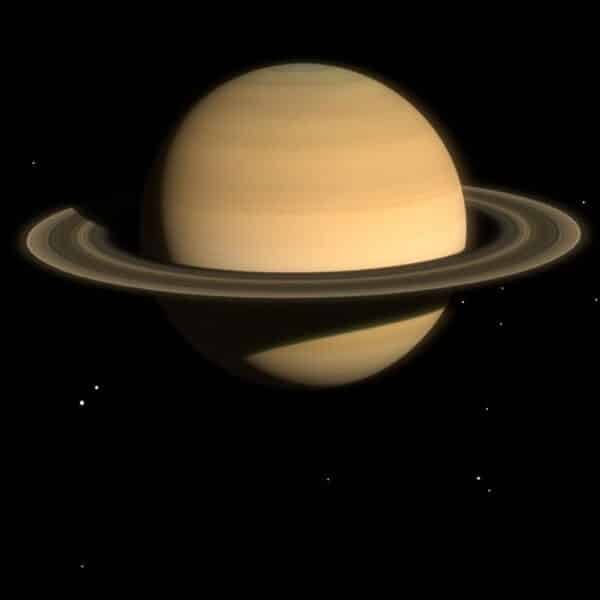
Saturn is slowly losing its rings to the planet’s gravity.
In November 1957, a Soviet space dog named Laika became the first animal to orbit Earth, aboard Sputnik 2.
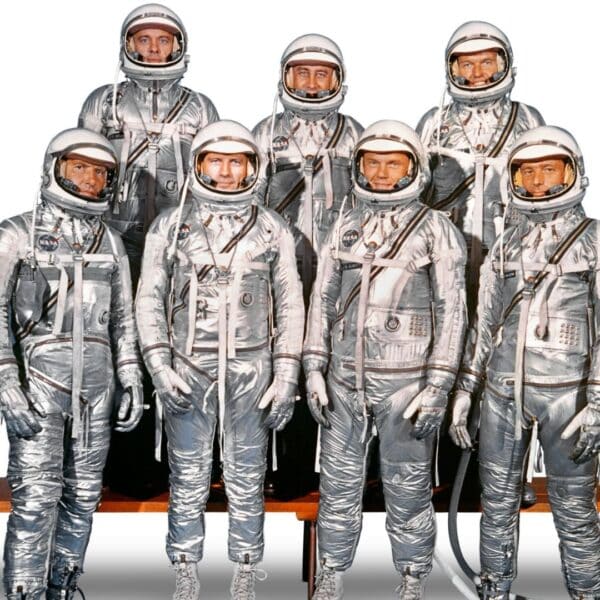
Modern spacesuits cost over $100 million, weigh around 110 pounds, and have multiple layers to protect astronauts from the harsh conditions of space.
When Buzz Aldrin first stepped onto the Moon, his first words were “Beautiful view. Magnificent desolation.”
Public interest in space exploration declined after the 1969 moon landing, with many Americans questioning the costs and priorities of NASA’s missions.
The original Xbox featured ambient sounds that included edited NASA Apollo mission transmissions.
Although telescopes can observe distant galaxies, they cannot see small objects, such as the flag on the Moon, due to limitations in angular resolution.
At 60 miles per hour (96 km/h), reaching the Sun would take approximately 177 years of non-stop driving.
When it was first discovered in 1781, Uranus was named George’s Star in honor of King George III of Britain.
It’s the law in New Mexico that Pluto is still legally a planet when it passes over the state.
The BBC initially banned the broadcasting of David Bowie’s song “Space Oddity” because it coincided with the moon landing, and the song sheds a gloomy light on space travel.
A day on Pluto lasts about 153 hours. That’s equivalent to 6.4 Earth days!
The Buran, a Soviet space shuttle, looked almost identical to the American shuttle because it was based on designs stolen from NASA.
In 1610, Galileo Galilei became the first person to look at Mars through a telescope.
If you were to scale down Saturn’s rings to the size of a piece of paper, they would be 10,000 times thinner than it.
The closest known black hole to Earth is Gaia BH1, located 1,560 light-years away in the Ophiuchus constellation.
In 1920, The New York Times called rockets in space ridiculous and belittled the rocket scientist Robert H. Goddard, calling him less educated than a high school student.
Many of the geological features on the far side of the Moon have Russian names because Soviet probes were the first to discover them.
After Apollo 11 launched from Cape Canaveral in 1969, the bishop of Orlando joked that he was bishop of the Moon according to Canon Laws relating to newly discovered territories.
In 2008, Japanese researchers planned to launch paper planes from the ISS to study atmospheric re-entry, but the experiment was postponed due to tracking and recovery concerns.
The concept of a rocket launch having a countdown originated from Fritz Lang’s 1929 movie “Woman in the Moon,” where the countdown was used to increase tension.
Only three objects in the sky can cast shadows on Earth: the Sun, the Moon, and Venus. The first two are pretty common, but Venusian shadows are very elusive!
The first living creatures to orbit the Moon weren’t humans but tortoises! They spent seven days there in 1968 before returning safely to Earth.
Located in the Large Magellanic Cloud, R136a1 holds the record as the most massive known star, with a mass estimated between 170 and 230 times that of the Sun.
All planets in the Solar System could fit between Earth and the Moon, but only when the Moon’s orbit places it at its furthest point from Earth.
Jupiter’s largest moon, Ganymede, has a salty ocean that contains more water than Earth.
Up until 2007, Russian space missions carried the TP-82, a tri-barreled gun that served as a rifle and shotgun.
Stars come in all sorts of colors, ranging from white to blue to yellow to red. The color of a star tells us a lot about it, but mostly it tells us its temperature.
In 2011, NASA conducted a sting operation at a Denny’s restaurant, detaining a 74-year-old woman attempting to sell a rice-sized moon rock.
After the USSR successfully launched the world’s first satellite, NASA tried to launch its own. It crashed in 3 seconds, so the press dubbed it “Kaputnik.”
NASA’s New Horizons space probe took almost ten years to travel the three billion miles (4.8 billion kilometers) to Pluto.
For 72 seconds in 1977, receivers on Earth picked up a signal from Deep Space. Dubbed the “Wow!” signal, we’re not sure what it was or where it came from.
The first true asteroid ever discovered was 2 Pallas. Ceres, which was discovered before it, was thought to be the first asteroid until it was reclassified as a dwarf planet.
Moondust smells like gunpowder, but only shortly after its exposure to oxygen. After that, it has almost no smell at all.
The galaxy cluster known as El Gordo (Spanish for “The Fat One”) held the title of the largest known galaxy cluster from 2012 to 2024.
Jupiter’s magnetic field is the single largest object in the Solar System. If it were visible to the naked eye, it would appear larger than the Sun or the Moon.
Despite Mercury being closer to the Sun, Venus is hotter as it has an atmosphere that traps and holds onto heat, much like a greenhouse.
Galaxies are categorized as either elliptical, irregular, or spiral according to their physical appearance.
The Crab Nebula, located in the Taurus constellation, is the remnant of a star that went supernova in 1054.
A 2020 study by the University of Nottingham estimated the existence of approximately 36 intelligent alien civilizations within our Milky Way galaxy.
The nearest star to the Sun is Proxima Centauri, a red dwarf located about 4.24 light-years away in the Centaurus constellation.
The Apollo mission left mirrors on the Moon, which allow us to “ping” it with lasers to measure its exact distance from Earth.
Astronauts aboard the International Space Station must exercise daily for at least two hours to prevent their muscles from declining due to the lack of gravity.
The object that often appears as the brightest “star” in the night sky is actually the planet Venus.
On average, Earth is struck by a football-field-sized meteoroid once every two thousand years.
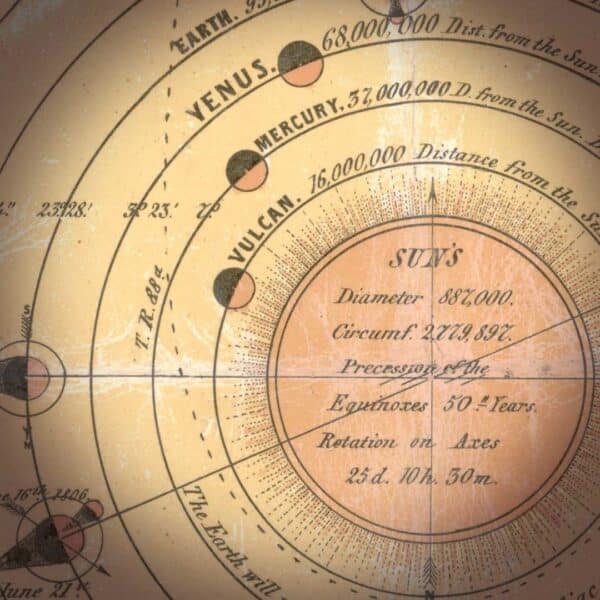
Astronomers in the 1800s believed there was one extra planet in the Solar System. Vulcan, the hypothetical planet, was meant to be between Mercury and the Sun.
The rings of Saturn aren’t solid; they’re made up of countless bits of rock, dust, and ice ranging from tiny grains to large chunks up to 10 meters across.
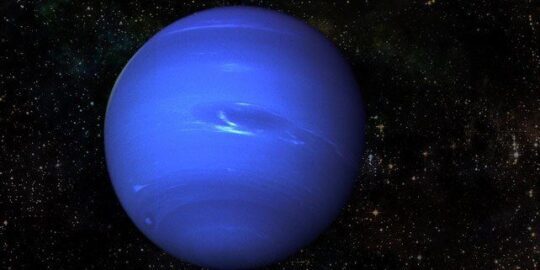
Like Jupiter, Neptune also has spots. Neptune’s Great Dark Spot is also a giant storm, but it’s not just one – the ice giant’s spots come and go relatively frequently.
Harrison Schmitt, the last man to walk on the moon during the Apollo missions, was allergic to moondust.
Some brown dwarfs have surface temperatures as low as -10°F (-23°C), making them cool enough to touch!
All eighty-eight of the constellations we know today were officially decided in the 1920s by the International Astronomical Union.
The Mariner 10 space probe was the first spacecraft to use the gravitational pull of a planet to slingshot it further along in space.
Water-based snow falls on Mars but turns into gas before reaching the planet’s surface.
At approximately 2.5 million light-years from Earth, the Andromeda Galaxy is the closest spiral galaxy to us.
When viewed from Mars, the Sun appears about two-thirds the size it does from Earth.

In 3,200 AD, the North Star will be Gamma Cephei instead of Polaris. This shift in North Stars occurs due to a slight “wobble” in Earth’s rotation.
Most planetary systems have more uniformly shaped planets with regular spacing, making our Solar System quite odd.
Mars’ soil is surprisingly nutrient-rich and would be pretty suited to growing vegetables like beans, turnips, or asparagus. Unfortunately, it’s also extremely salty and contains toxins.
Approximately 30% of the solar radiation that strikes Earth is reflected, with the rest absorbed by the land, sea, and atmosphere.
Neptune was discovered using math a few months before it was physically observed, as it was causing irregularities in Uranus’ orbit.
The videotapes originally used to record the Apollo 11 Moon landing were accidentally erased during a period when video tapes were scarce.
China has its own space station, the Tiangong space station. Like the International Space Station, the Tiangong is made up of multiple modules.
The Pleiades, a star cluster in the Taurus constellation, has been named over the millennia by many cultures, including Greek, Aztec, Celtic, and Australian Aboriginal.
While we have a few good theories, such as chemical reactions in the planet’s upper atmosphere, the exact cause of Jupiter’s Great Red Spot’s red color remains unknown.
On average, the Moon gets battered by as much as 6,000 pounds (2,721 kg) of meteorite material per day. It’s no wonder that the Moon appears so pock-marked!
The matter we can see or record with various devices makes up just 5% of the universe’s content. The other 95% is made up of dark matter and dark energy.
Up until about four million years ago, Mars had blue skies, nice fluffy white clouds, and flowing water everywhere.
All of Uranus’ moons are named after characters from Shakespeare and Alexander Pope’s works.
It’s estimated that there are a whopping 10,000 stars in the universe for every grain of sand on Earth!
In theory, there may be moons in the universe that have their own moons orbiting them. They are called subsatellites but are also known as submoons or moonmoons.
Historically, “nebula” referred to any cloudy-looking celestial object seen through a telescope. Today, it specifically means interstellar clouds of gas and dust.
While there is no exact point where Earth’s atmosphere ends, the edge of space is commonly defined as an altitude between 50 and 62 miles (80 to 100 kilometers).
In 1908, Russia was hit with a meteor so large it created an explosion 1,000 times as strong as the Hiroshima bomb and destroyed an area two-thirds the size of Rhode Island.
The Sun makes up 99.8% of the Solar System’s mass.
Jupiter is larger than all the other planets in the Solar System combined.
Every October, Earth passes through debris from Halley’s Comet, creating the Orionid meteor shower. Peaking around October 20–22, around 20 meteors per hour are visible under dark skies.
Astrophobia is a broad fear of celestial objects or outer space. It often develops after watching films about space exploration or alien invasions at a formative age.
Cosmophobia is the irrational fear of the universe and the end of the world.
The first man in space was Yuri Gagarin, a Soviet cosmonaut who orbited Earth aboard the Vostok 1 spacecraft on April 12, 1961.
The Messier catalog of astronomical objects doesn’t include any objects viewed exclusively from the southern hemisphere, as Charles Messier made his observations from France.
When Neil Armstrong and Buzz Aldrin landed on the moon, Buzz conducted a private communion service, drinking wine from a silver chalice he’d brought from his church.
The most spherical object in the known universe is the KIC 11145123 star, discovered in 2016, about 5,000 light-years away from Earth.

Almost all maps of the Solar System exaggerate the size of planets and underexaggerate the distance in space between them.